


In 1897 the United States Government passed the Bottled in Bond (BIB) Act which would be the first consumer protection law of the land. Prior to the new law, it was not uncommon for distillers to sell their raw whiskey to rectifiers who would do reprehensible things to the liquor to add flavor and extend the amount of the product they sold.
Rectifiers weren’t necessarily the only problem, even some unscrupulous distillers, in an effort to increase revenue from the spirits they distilled, would extend their products in unpalatable ways. It was common to take raw, white spirits and add iodine, tobacco and other substances, to create the color and taste of an aged whiskey. But many of these additives were harmful, making people sick or even killing them.
The Bottled In Bond act was actually supported and advocated by the US distillers. The rectifiers were causing problems for the distillers by undercutting the price of the legitimate spirits and damaging the trust of the consumer.. It was difficult, if not impossible, to tell what was really in the bottle you were drinking. Implementing government oversight provided consumer confidence and a new level of safety for whiskey consumers.
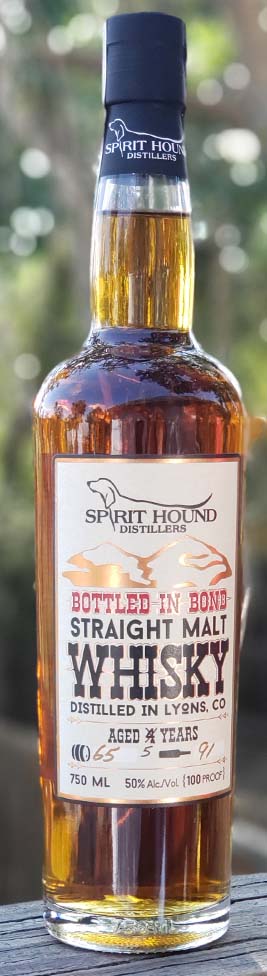
The Act laid out a set of rules to be followed to ensure the liquor inside the bottle was pure and reflected what the label said it was. Whiskey is what is typically considered to be Bottled in Bond, but any liquor made in the United States can qualify.
To be Bottled In Bond
- The liquor must be composed of the same kind of spirits produced from the same class of materials
- It must be produced in distillation season (January–June or July–December) by the same distiller at the same distillery
- It must be stored in wooden containers for at least 4 years in a Federally Bonded and supervised warehouse
- It may be filtered but must be unadulterated, meaning it cannot have any additional substances added for color or flavoring
- It must be bottled at 50% ABV (100 Proof), and may be reduced to meet that level through the use of pure water.
In the 19th century it was difficult to know what was really in a bottle of whiskey, but in the 21st century, with a heavily regulated food industry, it is much easier to know what is in the bottle. Bottled in Bond was the beginning of consumer protection laws and today, it is hard to conceive the whiskey on the local liquor store shelves would be anything but what it says on the bottle.
The Advantage to Bottled In Bond
Bottled in Bond made whiskey safe one hundred years ago, but with today’s laws, does it matter? What is the incentive for a distiller to add the extra expense of licensing and maintaining a government approved warehouse?
Bourbon that is Bottled in Bond seems to hold a level of mystique. There is a perceived higher level of quality than that of a standard whiskey, even though there can literally be no difference between the two. In fact, distilleries blend their spirits to create the most flavorful creations, which can be better than a straight Bottled in Bond bourbon.
So what’s the advantage to Bottled in Bond? If the contents of the bottle are the same as what is listed on the label, and the quality of the spirit and taste is arguably the same as other liquors, what’s the point?
The advantage the distillers were able to work into the Bottled in Bond Act in 1897 was a much needed tax break. Instead of paying taxes on the white dog liquor coming out of the still, Bottled in Bond allows the government to monitor the amount of spirits that are being stored in the distiller’s rickhouse, and in turn the tax man defers the taxes due on the product until it is bottled.
In the end the distiller is the winner with Bottle in Bond. The original intent to protect the consumer from horrifying ingredients in their whiskey is no longer an issue. But the mystique of bourbon being “Bottled In Bond” creates a perception that the bourbon is better than a non-bonded whiskey, and therefore more valuable. This allows the distiller to charge a premium price to the consumer, increasing revenue, and deferring the taxes on the product for several years as the spirit ages in the barrel.


