


Queen Bee Brews just celebrated their five year anniversary as a commercial meadery and tasting room. Like so many of the craft wineries, distilleries and breweries, Deborah Lee started out as a home brewer in 2003, making her own beer at home. After conquering beer, she turned her attention to mead.
Using the same basic process as brewing beer, Deb learned, experimented and became proficient at making mead. It was good enough, in fact, that she would outgrow her home based business and move to a commercial space to expand her production capabilities.
Today she has more than a dozen meads ready to taste and sell. The different meads, all named after historic women, have a variety of subtle flavors built specifically by Deborah through the selection of honey and botanicals added to the brew.
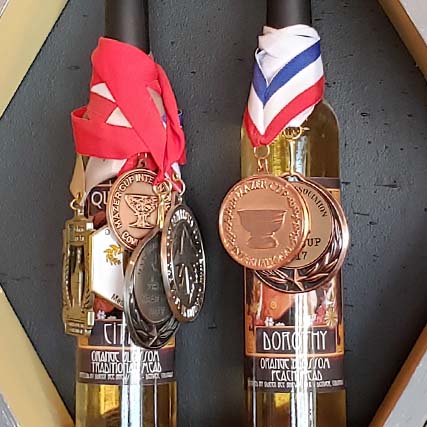
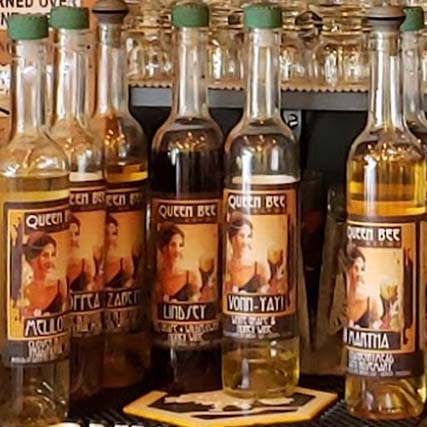
The subtle flavor inspired her to head outside to a 60-year old rose bush to collect petals to include as an additional ingredient into the finished mead. The rose petals enhance the rose notes and make a delicious drink.
Choosing from more than 300 varieties of honey in the US, she pairs specific honey flavors with the botanicals to create her different meads. She brews most of the mead herself, but also contracts out to Honnibrook Craft Meadery in Castle Rock, Colorado, for a “session mead”, or base mead, that she then adds botanicals to create the finished flavors.
The session mead has a light carbonation, another natural effect of the brewing process, that makes the mead lighter and distinct.
Mead is sometimes thought to be more like a beer without much diversity in flavor. Queen Bee’s meads, which are really more like a wine, and packed with variety in flavors. The meadery has a wide range of options from “Cofffea”, that has a wonderful coffee note, to “Magdalena” made with Hatch green chiles that leaves you with a spicy finish.
The Queen Bee can be found at many of the wine festivals around Colorado, and has a tasting room in North Denver.


